
WUF13 Azerbaijan
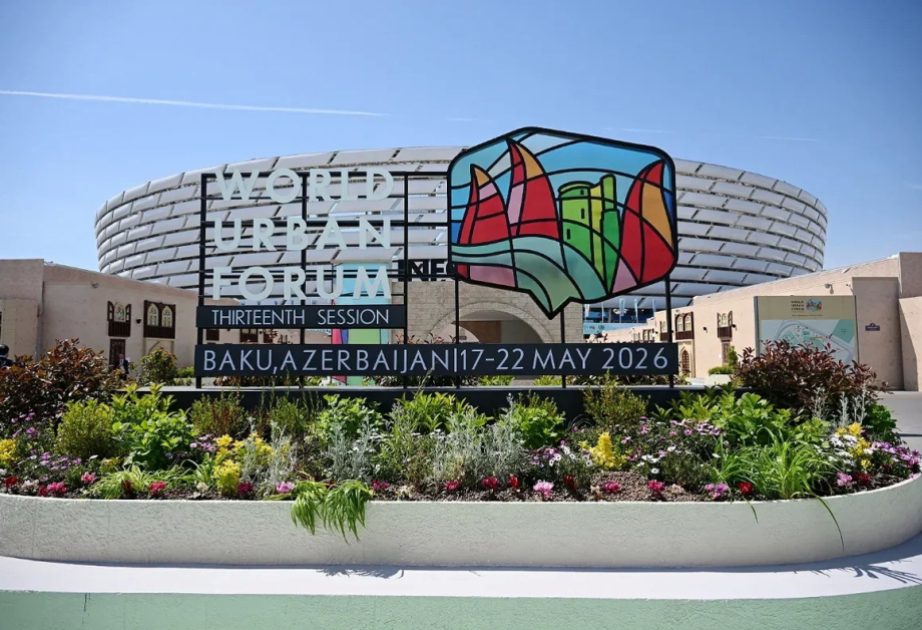
Thirteenth World Urban Forum (WUF13)
17 to 22 May 2026
Baku, Azerbaijan
Theme: Housing the world: Safe and resilient cities and communities
WUF13 Theme
The theme of WUF13 “Housing the world: Safe and resilient cities and communities” will shine a global spotlight on the urgent need to address the global housing crisis and position housing as a driver of inclusive, resilient and sustainable urban development.
Today, nearly 3 billion people face some form of housing inadequacy, with more than 1.1 billion living in informal settlements or slums, and over 300 million experiencing homelessness. As climate risks deepen and inequalities widen, WUF13 will explore how housing can advance inclusion, equity and resilience, highlighting practical solutions that connect homes to broader urban systems, including integrated planning, climate adaptation, land and tenure security, inclusive governance and locally driven action.
Taking place at the midpoint of the New Urban Agenda, WUF13 will play a pivotal role in shaping global discussions and will contribute to the 2026 UN Secretary-General’s report on its implementation.
Our numbers
58 000 Registered Participants
176 Countries
WUF13 Dialogues
Dialogues are high-profile events that set the agenda for policy and action on the Forum theme. They bring together global leaders, practitioners and decision-makers to debate solutions, share insights and engage participants in shaping the way forward.
The six Dialogues at WUF13 will look at housing through different dimensions: how it can be recognized and advanced as a human right; how it can be placed at the centre of policy and practice across levels of governance and global agendas; and how ensuring adequate and equitable housing for all can unlock broader progress towards more inclusive, resilient and sustainable cities.
Chair’s Summary of the Ministerial Meeting on the New Urban Agenda
Thirteenth session of the World Urban Forum (WUF13)
17 May 2026, Baku, the Republic of Azerbaijan
Opening
Excellencies, distinguished ministers, representatives of Member States, colleagues from the United Nations system, local and regional governments, civil society, academia and other partners,
As Chair, it is my honour to offer this summary of the key issues raised during today’s Ministerial Meeting on the New Urban Agenda.
Let me begin by expressing appreciation to all ministers, heads of delegation, panellists and participants who contributed to today’s discussions.
I also thank the delegations expressing appreciation to the Government and people of Azerbaijan for their warm hospitality and for the successful organization of WUF13 in Baku, which has brought together more than 57,000 participants from 176 countries, making it the largest session of the World Urban Forum to date.
I take note as well of ministers’ welcoming of the innovative approaches introduced in the preparations for WUF13, including the inaugural Leaders’ Statements Segment, which lends greater weight to urban discussions, as well as the joint intention of Azerbaijan and UN-Habitat to collaborate on operational guidelines for hosting future sessions of the World Urban Forum.
We also recognize the visionary leadership of H.E. President Ilham Aliyev, as well as the efforts of UN-Habitat and Executive Director Anacláudia Rossbach, in providing this important platform for international cooperation on adequate housing and sustainable urbanization.
Key overall message
Today’s meeting took place at an important moment. 2026 marks the midpoint of the New Urban Agenda’s 20-year implementation horizon. Ten years after its adoption in Quito, the New Urban Agenda remains a vital framework for advancing adequate housing and inclusive, safe, resilient and sustainable cities and human settlements. At the same time, today’s discussions made clear that the second decade must be defined not by renewed ambition alone, but by accelerated implementation, stronger partnerships and measurable progress in people’s lives.
A central message emerged throughout the day: housing is far more than shelter. It is a human right, a foundation for dignity and social inclusion, a driver of opportunity, and a practical pathway for climate resilience and sustainable urban development. As reflected in the theme of WUF13, “Housing the world: Safe and resilient cities and communities,” adequate housing is one of the clearest and most urgent entry points for delivering the New Urban Agenda in people’s daily lives.
Highlights from national statements
During the morning session, ministers and heads of delegation shared national experiences from the first decade of implementation.
Many speakers highlighted progress in strengthening national policy, legal and planning frameworks for sustainable urbanization, including national development plans, housing policies, spatial planning laws, land policies, integrated territorial frameworks, SDG-aligned strategies and national reporting processes. Several delegations also reported large-scale housing programmes, affordable housing finance measures, infrastructure investments, urban regeneration, informal settlement upgrading, land regularization, climate-responsive planning, digital tools and stronger local governance systems.
At the same time, the national statements underlined the scale of the challenges that remain. Speakers referred to rapid urbanization that continues to outpace planning, infrastructure, housing supply and service delivery. Housing affordability and shortages were identified as widespread concerns, affecting low-income households, middle-income groups, youth, first-time homebuyers, informal workers, migrants, displaced populations and vulnerable communities. Several statements also highlighted the persistence of slums, insecure tenure, inadequate basic services, climate and disaster risks, financing constraints, data gaps and uneven institutional capacity.
Across the three transformative commitments of the New Urban Agenda, the strongest emphasis was placed on sustainable urban development for social inclusion and ending poverty. Speakers repeatedly linked housing with poverty reduction, inclusion, stability, dignity and access to opportunity. Many emphasized that housing policies must reach those most at risk of being left behind, including low-income households, women, youth, older persons, persons with disabilities, migrants, informal workers, displaced populations, slum residents and communities affected by crisis or climate risk. Homelessness was also highlighted as an issue requiring continued attention, with several delegations sharing national efforts to expand access to adequate housing.
Environmentally sustainable and resilient urban development was also a major theme. Many delegations stressed the strong interlinkages between housing, urban planning, climate action and sustainable development. This was especially clear for Small Island Developing States, where housing systems are increasingly vulnerable to rising sea levels, extreme weather events and limited access to climate finance. Ministers also underlined that clean air is not only an environmental issue, but also a matter of public health, quality of life and sustainable urban planning.
Sustainable and inclusive urban prosperity and opportunities was also recognized, though less frequently than the other two commitments. Several speakers noted that housing shapes access to jobs, livelihoods, productivity, mobility and local economic development. However, the economic role of housing received less attention and may need to be more fully addressed in the next phase of New Urban Agenda implementation.
Several housing themes stood out across national statements. Affordability, sustainability, informal settlements and the climate-housing nexus were among the most frequently raised issues, while speakers also highlighted tenure security, access to basic services, public and social housing, and habitability. Other dimensions of adequate housing, including location, accessibility and cultural adequacy, were mentioned less often, suggesting areas where future discussion and implementation could go deeper.
A recurring message was that housing cannot be addressed in isolation. Speakers called for integrated and place-based approaches that connect housing with land, infrastructure, transport, services, jobs, social protection, public spaces, climate action and local economic development. Several also emphasized secondary cities, smaller towns, urban-rural linkages and balanced territorial development. In this context, speakers also underscored that sustainable and inclusive urban development should consider the protection of the historical and cultural heritage of cities.
National and regional urban forums were recognized as important platforms for exchanging good practices, strengthening partnerships and identifying solutions that can be adapted and scaled across contexts. Speakers also underscored the need to strengthen partnerships across government, academia, civil society, non-governmental organizations, communities and the private sector.
Several speakers highlighted the impact of wars, conflicts and disasters on cities, housing, infrastructure and basic services, as well as the displacement and humanitarian challenges that follow. Delegations also referred to the importance of post-conflict reconstruction and recovery. In this context, they welcomed Azerbaijan’s experience in post-conflict reconstruction, including as a source of lessons that may be relevant in similar contexts, and expressed solidarity with Azerbaijan in this undertaking.
Ministers also welcomed the planned launch at WUF13 of the “Smart, Sustainable Settlements for Safe Return Package (4SRP)” initiative, developed by Azerbaijan in collaboration with UN-Habitat, the International Organization for Migration and the Baku Climate and Peace Hub, as a vital step towards integrated solutions for climate-resilient, environmentally sustainable, peace-positive and people-centred urban recovery, particularly in fragile and post-conflict settings. Support was expressed for the planned establishment of a dedicated working group at WUF13 tasked with developing the 4SRP guidelines and criteria, which aim to set internationally recognized standards for sustainable recovery and facilitate greater access for vulnerable countries to international development and climate finance.
Among the drivers of effective implementation, governance, planning and financing were mentioned most frequently. Delegations called for better multilevel coordination, empowered local governments, stronger planning systems and more predictable financing. Capacity-building was also repeatedly emphasized, including support for project preparation, implementation and urban monitoring. Digital technologies were mentioned less frequently than other implementation drivers, suggesting an area where further exchange, practical guidance and capacity development may be useful.
National statements stressed that the next decade must move from commitments to delivery at scale. This will require stronger finance, stronger institutions and stronger partnerships. It will also require practical tools, local capacity, data systems and accountability mechanisms that help turn national commitments into visible improvements in people's lives.
Highlights from the three panel discussions
The afternoon panels deepened these discussions through the lens of the three transformative commitments of the New Urban Agenda.
The first panel, on housing for social inclusion and ending poverty, emphasized that land and housing should be recognized as human rights and as pillars of social and urban justice. Speakers stressed that the discussion must go beyond the number of housing units delivered to address the quality of housing, the strength of communities, and the social infrastructure that connects people to jobs, education, services and opportunity.
The panel highlighted the need to upgrade informal settlements through integrated approaches that combine housing, infrastructure, poverty reduction and resilience. Speakers also underlined that private investment has an important role to play, but must be aligned with the public interest and must not lead to gentrification or displacement.
The second panel, on housing for urban prosperity and opportunities for all, highlighted housing as foundational economic and social infrastructure. Speakers emphasized that housing policy should be people-centred and demand-driven, and connected to jobs, education, health, transport, safety, services and local livelihoods. The panel stressed that housing delivery must move from isolated projects to scaled, coordinated citywide and nationwide systems.
Participants also highlighted the need to unlock well-located land, strengthen inclusive and flexible financing systems, recognize the economic role of informal settlements, and ensure that housing interventions reach those most excluded from formal markets. A recurring message was that a city that works for its poorest residents works better for everyone.
The third panel, on housing for environmentally sustainable and resilient urban development, underscored that the climate crisis is also a housing crisis. Speakers noted that more than one billion people living in informal settlements are highly exposed to extreme weather events and often lack access to basic services. The panel emphasized that decisions on how homes and infrastructure are planned, built, upgraded and retrofitted can reduce emissions, strengthen resilience and improve quality of life at the same time.
Participants called for stronger alignment between housing policies and climate policies, including national climate strategies, NDCs, National Adaptation Plans and long-term strategies. They also stressed the need for more climate finance, stronger local capacity, better project preparation, multilevel governance and partnerships with communities, local governments, development banks, housing associations and the private sector.
Priorities for the next decade
Across the full day of discussions, several priorities emerged for the remaining decade of New Urban Agenda implementation.
First, adequate, affordable, safe and climate-resilient housing must be placed at the centre of national and local development strategies, including through social housing, rental housing, public housing, community-led approaches and support for low- and middle-income households.
Second, commitments must be matched by delivery systems. This requires clearer accountability, technical support, project preparation, data systems and measurable follow-up.
Third, urban finance must be strengthened, including affordable housing finance, municipal finance, climate and development finance, concessional finance, blended finance, private-sector partnerships and predictable support for vulnerable countries and regions.
Fourth, housing must be integrated with broader urban and territorial planning, linking it with land, infrastructure, services, mobility, jobs, public spaces, social policy, climate resilience and local economic development.
Fifth, cities and communities need greater investment in resilient, green and low-carbon infrastructure, including energy-efficient buildings, water and sanitation, sustainable mobility, clean energy, flood management, coastal resilience, disaster risk reduction and risk-informed relocation.
Sixth, local governments must be empowered through stronger multilevel governance, municipal capacity, fiscal decentralization, participatory planning and clearer roles for cities and regions in decision-making.
Finally, implementation must remain people-centred and inclusive, with particular attention to women, youth, older persons, persons with disabilities, migrants, displaced populations, informal workers, low-income households, slum residents, landless communities and communities affected by crisis or climate risk.
Closing
Excellencies, colleagues,
Today's discussions reaffirmed that the New Urban Agenda remains not only relevant, but indispensable. The first decade of implementation has generated important experiences, lessons and partnerships. The second decade must now be defined by delivery at scale.
The messages emerging from this Ministerial Meeting will inform the wider deliberations of WUF13, the Baku Call to Action, and preparations for the High-level Meeting of the General Assembly on the midterm review of the New Urban Agenda happening on 16 and 17 July 2026 in New York.
As Chair, I hear a clear call from today's meeting to use this midterm moment not only to take stock, but to renew political commitment, strengthen implementation and place adequate housing at the centre of sustainable urban development.
Let us carry this momentum forward from Baku to New York, and from commitment to action, as we work together to make cities and human settlements inclusive, safe, resilient and sustainable by 2036.
Thank you.
Baku Call to Action
Inspired by the action-oriented nature of the thirteenth session of the World Urban Forum (WUF13) held in Baku, Azerbaijan, the Baku Call to Action is the result of a collective, co-produced, equitable, and inclusive process. It presents a set of diverse contributions from stakeholders across sectors and spheres of governance, including civil society organizations, women, older persons, children and youth, Indigenous Peoples, professionals, academia, researchers, local and regional governments, persons with disabilities, parliamentarians, the private sector, and other actors working in the housing domain.
This document is the result of months of work involving comprehensive stakeholder consultations ahead of the World Urban Forum. We welcome and celebrate the progress, calling for it to be adopted as standard practice across the World Urban Forum cycle with pre and post-consultations, guided by a structured multi-stakeholder engagement mechanism to ensure continuity and accountability.
We express sincere appreciation to the Government of Azerbaijan for hosting a pioneering WUF13 with more than 58,000 participants from 176 countries participating, making it the largest WUF to date. The first time in history, at the initiative of the host country, 27 Heads of State and Heads of Government participated in the Leaders’ Statement Summit. Over hundred ministers, United Nations (UN) Deputy Secretary General (DSG) and several high-level dignitaries. The innovations of WUF13 include Baku Urban Award, Business and Innovation Hub, WUF Academy campus and Practices Hub.
Preamble
The global housing crisis is reaching its tipping point. This crisis is not accidental but the result of deep structural, systemic, and governance failures. This polycrisis is driven by complex and interconnected factors, related to dispossession, colonization, racism, inequality and other historical and current contexts.
It is estimated that 3.4 billion people are affected by inadequate housing globally.
A home is not just four walls and a roof. It is a place of dignity, culture and identity, and most importantly, an anchor for a secure future. It is a central piece in an interconnected system to other public amenities and services such as public spaces, schools, transportation, health facilities, and others. Housing must therefore be recognized for its social and environmental function and prioritized as a human right at the heart of the development agenda integrated into a broader vision for the right to the city, social protection and economic growth.
• All over the world, the financialization and commodification of housing is deepening urban inequality and poverty. Homes are becoming unaffordable, compounded by gentrification and increasing insecure tenure that are pushing spatial inequities and homelessness;
• Poor land management and planning systems are at the heart of many housing challenges from spatial segregation, infrastructure inequalities and sprawl, often resulting in market speculation and displacement;
• Despite global and national commitments, public funding for housing is shrinking and conventional finance remains fragmented, short-term and poorly connected to the territories where housing is planned, serviced, upgraded, built and managed;
• Local and regional governments are at the frontline of urban transformation and delivery but often do not have the mandate, capacity or resources to address the global housing crisis;
• Conflict, war and urbicide are directly impacting civilian infrastructure such as schools, hospitals, public amenities and homes as well as ecology and biodiversity rendering people homeless and often forcing them to become refugees or Internally Displaced Persons (IDPs);
• Urban centres, megacities and secondary cities are rapidly changing in demography. Most are struggling to meet the demands for intergenerational housing systems that support and care for persons with disabilities, youth, children, women, Indigenous Peoples and older persons;
• Forced evictions are increasing globally, directly resulting in displacement and exacerbating the housing crisis. Demolition of a home goes much beyond losing personal belongings. It carries long lasting mental, emotional and physical trauma;
• Globally, cities are deeply impacted by climate change including dramatic flooding, urban heating and poor air quality. The families and individuals living in inadequate housing face the disproportionate impact of the changing climate;
• Historically, women have carried the burden of care work yet still face structural barriers regarding housing, property ownership, employment, basic services and mobility, amongst others.
• The economic crisis and other contributing factors are rendering families and individuals homeless at an unprecedented pace. Many cities are choosing to criminalise the homelessness, often with little solutions or alternatives on the table;
• Globally, housing is not adequately integrated into broader economic and infrastructure systems such as water and sanitation, electricity, mobility, connectivity, public amenities, education and health. Uncoordinated delivery, maintenance and financing of infrastructure and basic services compound the impacts of housing inadequacy.
• Construction and building materials like concrete contribute close to one third of global greenhouse gas emissions (GHG) at the expense of using low-carbon alternatives, traditional and indigenous construction techniques.
• Inadequate professional capacity, data and evidence often breed poor decision-making, encouraging exploitative practices and corruption.
Despite these common features, each neighbourhood, city, country, region and continent is distinct. To truly understand the nature of this crisis, local and national context truly matters.
The scale of the global housing challenge calls for an assertive, concerted, and urgent response. At the heart of this Call to Action is a plea for housing to be reprioritized, guided by the stewardship of integrated housing policies, supported by organized multi-stakeholder action, long-term context specific financing, improved implementation capacity, multilevel governance, sustained public investment, and measurable accountability mechanisms.
Moving from diagnosis to action
We recognize the continued commitments that have shaped multilateral action on housing, from inclusion of Adequate Housing as an internationally recognized human right, to the Habitat processes and leading up to the 2030 Agenda and the Pact for the Future. In a year that marks the tenth anniversary of the New Urban Agenda, we call on Member States to accelerate implementation and strengthen UN-Habitat's catalytic function as a partnership and convening agency in addressing the global housing crisis.
UN-Habitat's Strategic Plan 2026–2029 offers a blueprint for accelerating action on housing through diverse mechanisms such as the Open-Ended Intergovernmental Expert Working Group on Adequate Housing for All (OEWG-H). Member States and stakeholders are encouraged to engage actively in the working group, nominating experts and practitioners and promoting inclusive participation by ensuring inclusion of underrepresented groups.
There is a clear opportunity to position the next decade, and subsequent five sessions of the World Urban Forum (2026–2036), as a decade of action to accelerate implementation of the New Urban Agenda and deliver measurable progress on SDGs. WUF outcomes should include trackable commitments, document successful programmes and projects and share implementation pathways to inform the post-2030 agenda.
Local and national processes contribute towards building strong political momentum towards the housing agenda. The summaries of the Ministerial Meeting on the New Urban Agenda (NUA), the Nairobi Declaration of the Second Africa Urban Forum (April 2026) and many regional agreements set out ambitious priorities on adequate, affordable, inclusive and climate-resilient housing. This document also opens the possibility of new forms of south-south and north-south collaboration, learning and cooperation.
These calls to action are organized into three areas: recognizing the underlying rights and drivers of the housing crisis, responding to its direct manifestations and transform housing systems for a just, inclusive, resilient and sustainable future for all.
Recognize underlining rights and drivers
1. Protect, respect and fulfil our human rights! Across contexts, housing continues to be treated as a commodity rather than as a right, with evictions, demolitions, conflicts and displacement undermining dignity, security and livelihoods. We call for the full adoption and enforcement of a human rights approach to housing, including safeguards against forced evictions, stronger tenure and tenant protections, as well as access to justice. With support from international organizations, national and local governments must embed this call into legal, policy, land use planning and institutional frameworks that recognize and protect the social and environmental function of housing. We call for institutionalizing community-led and participatory approaches within regional, national and local housing systems.
2. Protect our homes! Families, individuals and internally displaced people are often pushed into insecure or substandard housing, exposing them to further displacement, insecurity and exclusion. We call for integrated housing approaches that link humanitarian response, recovery and long-term development, advancing climate-resilient and people-centred urban recovery in fragile and post-conflict settings and facilitating their access to development and climate finance. National and local governments, humanitarian and development actors, and international institutions must protect housing and essential civilian infrastructure, strengthen safeguards against displacement and destruction, and uphold mechanisms that ensure these protections are effectively enforced. There are significant global precedents for post-conflict reconstruction including from host government of Azerbaijan. We urge a coordinated approach to prioritise reconstruction and recovery efforts and ultimately the return of internally displaced people (IDPs) to their homes. Free and prior informed consent should be guaranteed by all national governments.
3. Recognize our diversity! Housing systems continue to overlook the local contexts and the intersection of gender, ethnicity, culture, age, disability, legal status and citizenship that foster exclusion and unequal access to land and housing. We call for intergenerational, and intersectional approaches to housing that place people at the centre of policy and delivery, recognizing diverse groups as co-creators. Civil society and grassroots movements must lead together with government, private sector and professionals embedding and protecting diversity in housing policies.
4. Make our homes climate resilient! Climate impacts are accelerating housing insecurity and displacement, disproportionately affecting communities already facing social, economic and environmental precarity across neighbourhoods, cities and regions. Repeated floods, droughts, biodiversity loss, pollution, extreme heat, and worsening air quality are having devastating impacts on public health, ecosystems, livelihoods, livability, and overall quality of life. We call for housing systems that strengthen climate resilience, preserve biodiversity and mitigate harmful impacts through nature-based, community-led and locally grounded solutions, committed to climate justice and supported by environmentally conscious urbanization and planning. We call for strengthening people-led localized, indigenous and traditional practices along with national and local government interventions towards resilient infrastructure, renewable energy, basic services, disaster preparedness and prevention, livelihoods and social networks.
Responding to direct manifestations
5. Home as the catalyst for integration! Housing is too often located in isolation from infrastructure, essential services and economic opportunities, with urban sprawl, spatial segregation and poorly coordinated land-use planning pushing low-income households into peripheral and exclusionary areas far from jobs, services and opportunities. We call for an integrated and participatory spatial planning approach, with a gender lens, that connects housing with transport, services, livelihoods, and natural and cultural heritage, while promoting mixed, inclusive and well-serviced intergenerational neighbourhoods. We call upon professionals, academia and research institutions to develop a shared vision with government and civil society calling for integrated urban planning and targeted subsidies that include housing, economic opportunities and transport.
6. Ensure homes are affordable for all! Housing is becoming increasingly unaffordable due to rising land values, property speculation, short-term rentals, insecure labour markets, limited housing supply and unequal access to finance, forcing many households into homelessness and inadequate living conditions. We call for sustained measures to improve affordability, including expanding access to rental and social housing, advancing inclusionary zoning, strengthening subsidies and cost-reduction strategies, regulating speculative practices, improving property taxation systems and access to finance across income groups. We encourage Parliamentarians and National government to introduce legislative measures that protect affordability, while encouraging increased delivery through public housing programmes, Development Finance Institutions (DFI's), private sector & self-built housing initiatives.
7. Ensure housing without discrimination! Neighbourhoods go beyond their physical shape and location; they are spaces of care, social connection, culture, safety and collective life that enable human capabilities, wellbeing and community belonging to flourish. We call for housing approaches that recognize gender, diversity, sexual orientation and promote accessibility, proximity, safety, wellbeing and social inclusion by addressing gender-based violence, strengthening public and shared spaces, and advancing universal and inclusive housing design. We urge government, professional bodies and civil society to develop clear guidelines that foster inclusive and mixed-use neighbourhoods strengthening social cohesion, reduce segregation and improve safety, health and dignity for all.
8. Stop forced evictions! Forced evictions and displacement constitute gross violations of internationally recognized human rights, undermining housing security, destroying livelihoods, aggravating the climate crisis, eroding dignity and weakening community systems, often without adequate safeguards or alternatives. We call for stronger protections against forced evictions and displacement, including legal safeguards, monitoring mechanisms and preventive approaches that ensure security of tenure, while prioritizing in-situ upgrading, community-led approaches, and adequate compensation and alternatives wherever relocation cannot be avoided. Parliamentary committees, government departments, human rights institutions and international organizations supported by United Nations (UN) agencies must strengthen accountability and establish permanent multi-stakeholder mechanisms to monitor, map and address global patterns of forced evictions and displacement.
Transforming housing systems
9. Diversify housing approaches! Millions are already shaping cities through self-built, incremental and informal housing systems, yet these realities remain excluded from policy and legal recognition. We call for an approach that is diverse and locally grounded that includes incremental housing, city-wide informal settlement upgrading, regularization, rental and social housing, cooperatives, community land trusts, inclusionary housing and community-led homes. We encourage stronger collaboration between national and local government, civil society, housing providers and operators, private sector finance institutions and banks that innovate and incentivise demand-driven programmes through a combination of public, private, community, micro and blended financial instruments.
10. Secure land for homes! Rising urbanization, mounting financialization and weak land governance systems are driving increasing land costs, property speculation, spatial inequality and insecurity of tenure. We call for stronger public and local stewardship of land systems through appropriate regulation of land markets, curbing speculation, property taxation, inclusionary housing, development charges and land value capture that ensure equitable access to serviced and de-risked land. We appeal to parliaments and national departments to decentralize land management to local authorities and local governments, land institutions, communities and development actors must strengthen tenure rights and protections while advancing inclusive and accountable land governance systems.
11. Provide money where the need is! Housing finance systems remain fragmented, uncoordinated and inaccessible, with limited public investment, unequal access to credit and mechanisms that fail to reach low-income households and communities. We call for the reimagining of housing finance value chain to prioritize inclusion and scale by strengthening municipal finance with a focus on fiscal autonomy and revenue generation strategies. We call on development banks and the private sector to prioritize access to credit and establish predictable, long-term financing frameworks that are territorially grounded and accessible to those most in need. We encourage the private sector to partner with national and local governments, central banks, financial institutions and organized community savings to pioneer new ways to calculate and manage risk, target subsidies, expand access to credit and blend finance. We encourage Parliamentarians and national treasury to diversify government subsidies to cater to diversity of housing approaches, drawing in private and community-led savings.
12. Encourage a multi-sector and multi-actor approach! Fragmented planning systems continue to reinforce exclusion, spatial inequality and inefficient urban growth by disconnecting housing from land, infrastructure, transport, livelihoods and essential services. We call for integrated and systems-based planning approaches that embed housing within broader territorial and urban frameworks while advancing equity, inclusion and spatial justice and the right to the city. We urge that this process is driven through empowering local governments, civil society organizations, grassroots movements and private sector actors to co-produce outcomes.
13. Strengthen multilevel and participatory governance! Effective housing systems require strong cooperation, partnerships and coordination across all levels of government and grassroots, civil society, professionals and development actors. Local and regional governments, from intermediary to mega-cities, are often tasked with implementation without the mandates, financing or institutional support required to deliver effectively. We call upon Member States to drive structural reforms that clarify responsibilities, improve coordination across institutions, sectors and stakeholders, and empower local and regional governments through decentralized financing, participatory planning tools and strengthened institutional and implementation capacity. National, regional and local governments, communities, professionals, development partners and civil society must strengthen multilevel and multi-stakeholder governance mechanisms at metropolitan and regional levels that support inclusive housing delivery, city-wide informal settlement upgrading and locally grounded urban transformation.
14. Commit to implementation, accountability and delivery! Commitments to housing are not lacking, yet delivery continues to fall short due to weak coordination, limited capacity, and ineffective systems. We call for implementation of national housing strategies, with clear pathways, measurable targets and strong monitoring and reporting mechanisms, alongside sustained investment in education, training and professional development systems that strengthen implementation capacity. We encourage civil society, local, regional and national governments to establish partnerships, strong National Habitat Forums and joint committees to build capacity, strengthen coordination, document successful practices and monitor progress. At a global level, we encourage UN-Habitat to use the World Urban Forum as a key convenor to monitor progress in the implementation of the New Urban Agenda and scale up successful housing practices.
15. Use knowledge and data for public interest! Housing systems often operate with poor, disaggregated and outdated information related to land records, housing and market studies, census and demographic information and economic evidence. This hinders the ability to respond to rapidly changing needs, natural disasters or to long-term planning. We call for a strong commitment to an evidence-based approach that combines local and community-led data with scientific and academic knowledge. We call for academic institutions, research partners and practitioners to bridge knowledge and capacity gaps, integrating the possibilities of artificial intelligence, towards a stronger analytical and empirical frameworks. We encourage international organizations, governments and the academic community to advocate for more resources to accelerate research, particularly in the global south. This includes developing targeted programmes for capacity development of professionals, public sector officials, civil society & grassroots movements towards participatory planning processes.
In conclusion, we thank the Government of Azerbaijan and its people for their warm hospitality. The Baku Call to Action is an ambitious call to confront the housing crisis at its roots. Together, we must organize and confront these challenges, leaving no one behind.
Disclaimer: The Baku Call to Action is a stakeholder-driven outcome document from WUF13 based on consultations and deliberations among stakeholders and partners. The document does not constitute a negotiated intergovernmental outcome and does not necessarily reflect the views or official positions of Member States or the Secretariat of the United Nations.
2026, May 21